Designing the Micro Interactions for an Improved User Experience
What are Micro Interactions?
In interaction design, micro interactions refer to small, often subtle, interactions between a user and a product or system, which often convey the system status or helps users to prevent errors.
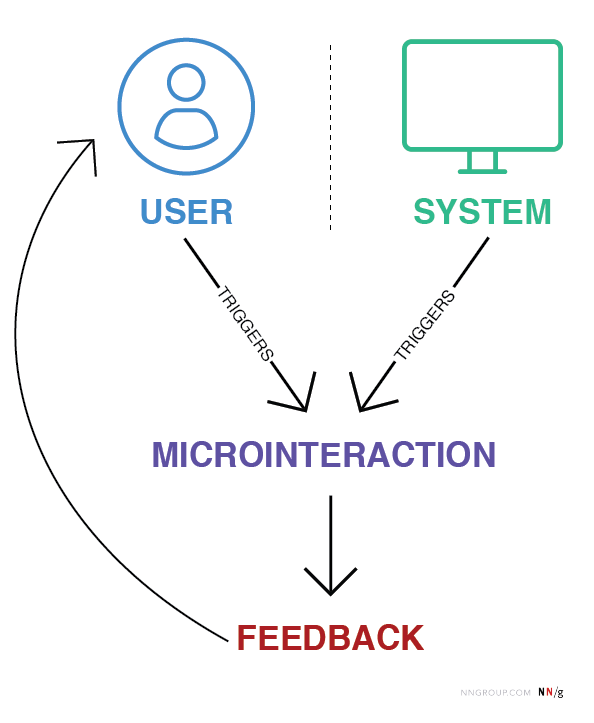
Figure 1. demonstrating the process flow of microinteractions triggered by a user or system, resulting in feedback adapted from Nielsen Norman Group.
A typical process flow for microinteractions involves the triggering of the interaction either by the user or the system, followed by a small change in the user interface that play a crucial role in providing feedback and enhancing the overall user experience. By thoughtfully designing micro interactions, designers can create a product that is not only functional but also enjoyable and easy to use. In this article, we will explore the importance of micro interactions in user experience design, and provide examples of how they can be designed effectively.
Why are micro interactions important?
Micro interactions are important because they can make a significant difference in how users perceive a product/service. By providing feedback, guidance, and affirmation to users, micro interactions can help users feel more in control in their interactions with the product (Bandura, 1977). Specifically, micro interactions can promote self-efficacy by providing users with feedback and guidance that help them to feel more confident in their ability to use a product or system.
Note well that: Self-efficacy is the belief in one's ability to accomplish a specific task or achieve a specific goal.
Thus, when users feel more confident in their ability to use a product, they are more likely to engage with it, enjoy the experience, and accomplish their goals. This, in turn, can lead to a more positive overall experience, as users are more likely to feel satisfied and engaged with a product that provides clear and meaningful feedback.
Additionally, micro interactions can provide a competive edge by differentiating a product from its competitors. In an overcrowded marketplace, a well-designed micro interaction can be instrumental in helping users to choose one product over another. By providing a unique, personalized, and enjoyable experience, a product can stand out from the crowd and capture the attention of potential users.
Examples of well-designed micro interactions
There are a plethora of examples of well-designed micro interactions in the world of interaction design. Here are a few:
- Slack's loading animation
When users open Slack, they are greeted with a loading animation that features a spinning icon and a playful message, such as "gathering unicorns" or "firing up the hamster wheels." This animation provides feedback to users that the app is working to load their messages, and it also adds a bit of personality and humor to the experience.
- Airbnb's star rating system
When users rate a listing on Airbnb, they are presented with a star rating system that provides immediate feedback on their selection. As users hover over each star, the rating is highlighted in real-time, enabling users to see the impact of their selection before they click. This feedback not only enables users make a more informed decision, but also makes the process of rating a listing more engaging.
- Apple's swipe to unlock
For years, Apple's "swipe to unlock" feature was a hallmark of the iPhone's design. This simple micro interaction provided feedback to users that their device was unlocked and ready for use, and it also became an iconic part of the iPhone's brand identity.
Tips for designing effective micro interactions
If you are a designer looking to create effective micro interactions, here are a few tips to keep in mind:
- Keep it simple
Micro interactions should offer simplicity and be intuitive. Users should be able to understand what they are supposed to do without having to think too hard. Keep the interaction minimal and avoid adding unnecessary complexity.
- Provide feedback
One of the primary purposes of micro interactions is to provide feedback to users. The feedback may be in the form of a visual or auditory cue, such as an animation, sound, or notification. Accordingly, designers should ensure that the micro interaction provides clear and meaningful feedback, so users understand what is happening and feel confident in their actions.
- Be consistent
Consistency is essential in interaction design. It's imperative that micro interactions are consistent with the overall design of the product, and that are responsive i.e., they behave predictably across different devices and platforms.
- Add personality
Micro interactions can also be an excellent opportunity to add personality and humor to a product. This designers can explore ways to make micro interactions more engaging and memorable, while still maintaining functionality and intuitiveness with your product.
Micro interactions charactistics
Micro interactions can be categorized in several ways. The list below describes some common characteristics that designers often consider when designing micro interactions:
- Guiding
Guiding micro interactions are those that help users navigate through a product or system. These interactions can include features like tooltips, hints, and progress indicators. Guiding micro interactions provide users with feedback that helps them understand what actions they need to take to accomplish their goals.
- Feedback
Feedback micro interactions are those that provide users with feedback on their actions. These interactions can include features like confirmation messages, error messages, and visual cues that indicate the status of a task. Feedback micro interactions help users understand the impact of their actions and provide assurance that they are making progress towards their goals.
- Instructional
Instructional micro interactions are those that provide users with instruction on how to use a product or system. These interactions can include things like tutorials, onboarding experiences, and contextual help. Instructional micro interactions help users learn how to use a product effectively and can reduce the amount of frustration users experience when trying to accomplish their goals.
- Friendly
Friendly micro interactions are those that add personality and warmth to a product or system. These interactions can include features such as animations, sounds, and playful language. Friendly micro interactions can make a product more enjoyable to use and can promote an emotional connection between the user and the product.
- Gamification
Gamification micro interactions are those that use game-like elements to motivate users and encourage engagement. These interactions can include things like progress bars, badges, and rewards. Gamification micro interactions can make a product more fun and engaging, and can help to motivate users to continue using the product.
- Aesthetic
Aesthetic micro interactions are those that focus on the visual and sensory aspects of a product or system. These interactions can include features such as animations, transitions, and visual effects. Aesthetic micro interactions can make a product more visually appealing and can enhance the overall user experience (Saffer, 2013).
In summary, designing effective micro interactions involves considering the specific needs and goals of the user, and creating interactions that are intuitive, consistent, and meaningful. By incorporating guiding, feedback, instructional, friendly, gamification, and aesthetic micro interactions into their designs, designers can create products that are engaging, enjoyable to use, and effective at helping users accomplish their goals.
References
Bandura, A. (1977). Self-efficacy: toward a unifying theory of behavioral change. Psychological review, 84(2), 191-215.
Saffer, D. (2013). Microinteractions: designing with details. " O'Reilly Media, Inc.".
