Responsible Computing: Ethics in Design, Part I
Recently, I had the privilege of delivering a lecture to a sizable audience of more than sixty (60) Bachelor of Computer Science students at Jomo Kenyatta University of Agriculture and Technology in Kenya. The focus of my presentation was "Responsible Computing: Ethics in Design." This article is the first installment (Part I) of a two-part series, where we explore the following themes:
- Establishing Responsible Computing
- Promoting Inclusivity and Accessibility
- Nurturing Ethical Design and Behavior
- Embracing Cultural and Social Sensitivity
Now, let's delve into the heart of our discussion and explore what Responsible Computing truly entails. To understand the concept of Responsible Computing, it's essential to grasp its core principles and the profound impact it can have on the design and development of interactive media products. Let's begin our journey by defining responsible computing.
What is Responsible Computing?
Responsible Computing is the practice of designing, developing, and using technology in a manner that takes into account ethical considerations, societal impact, sustainability, privacy, professionalism, and accountability. In addition, responsible computing emphasises making responsible choices in technology design, development and usage to ensure positive outcomes and avoid harm for individuals, as well as society as a whole.
Now that we have established a clear understanding of what Responsible Computing entails, let's now delve into the core principles that guide this practice. Responsible Computing is guided by several key principles, which serve as the foundation for ethical technology design, development and usage. These principles help us navigate the complex landscape of technology and ensure that it aligns with the best interests of individuals and society as a whole. Let's explore these principles in greater detail.
Three Main Guiding Principles of Responsible Design
While there are a plethora of guiding principles, we will focus on these three primary ones, which we will discuss more extensively later in this article.
Inclusivity and Accessibility
- Create technology that is equal and accesibile to All.
- As well as to ensure equitable access to all users with diverse backgrounds and needs. For example, at teachsomebody.com, we believe that everyone deserves the right to education irrespective of their race, gender, ethnic or social origin, socio-economic status, nationality, religion or political preference, age or disability. Accordingly, we strive to make education accessible, available, adaptable, and acceptable for all.
Ethical Decision Making
- Adhere to ethical principles in the design process. For a more in-depth exploration of the code of ethics, you may consider examining the codes of ethics and professional conduct established by prominent organizations such as the Association for Computing Machinery (ACM) and the Institute of Electrical and Electronics Engineers (IEEE).
- Prioritise ethical behaviour, fairness, transparency, and accountability throughout the product design lifecycle.
Impact and Empathy
- Respect user privacy and data protection, foster empathy and emotional intelligence, mitigate bias and ensure transparency.
- Consider the societal impact of products especially as it relates to addressing the United Nations Sustainable Development Goals (SDGs).
Let's now dive deeper into how responsible computing aligns with specific UN SDGs.
- Goal 11: Sustainable Cities and Communities: Technology plays an important role in building smart, sustainable cities, ultimately fostering responsible urbanization, and improving the quality of life in urban areas.
- Goal 3: Good Health and Well-Being: Technology can be exploited to improve healthcare, enhance accessibility to medical services, and support health-related goals, while respecting data privacy and security.
- Goal 4: Quality Education: Responsible Computing can promote equal access to quality education, improve online learning opportunities, and bridge the education gap, particularly in underserved communities.
- Goal 10: Reduced Inequalities: Responsible Computing can bridge digital divides, promote digital literacy, and ensure that technology is accessible and beneficial to all, reducing inequalities in access and opportunities.
- Goal 13: Climate Action: Sustainable practices in technology design, development, and usage, including energy-efficient computing and responsible disposal of electronic waste, support efforts to combat climate change.
- Goal 5: Gender Equality: Responsible Computing can help to address gender biases in technology and promote gender equality by ensuring equitable access and opportunities for all genders.
- Goal 8: Decent Work and Economic Growth: Promoting ethical and inclusive employment practices in the tech industry supports this goal, ensuring that technology-related jobs are fair and inclusive.
By aligning Responsible Computing with the United Nations Sustainable Development Goals, we can harness the potential of technology to foster inclusivity, address global challenges, and create a more equitable and sustainable future for all. For a more in-depth exploration of responsible computing and it's six domains of focus; namely:
- Data center: Focused on environmental impact reduction in data center operations.
- Infrastructure: Encompassing the lifecycle of computing units, from sourcing and conserving precious metals to energy reduction and recycling.
- Code: Emphasizing efficient, open, and secure coding practices.
- Data: Implementing data privacy and transparency, with a focus on obtaining consent and authorization for data use.
- Systems: Committed to producing ethical and unbiased systems, including explainable AI.
- Impact: addressing societal issues, including enhancing social mobility.
You may refer to this article from IBM. Let's now delve deeper into the notion of inclusivity and accessibility in design.
Inclusive Design
According to the Nielsen and Norman Group, inclusive design "describes methodologies to create products that understand and enable people of all backgrounds and abilities." Moreover, it aims to addresses accessibility, age, culture, economic situation, education, gender, geographic location, language, and race. Furthermore, inclusive design empathises with users and adapts interfaces to meet the needs of these users. Finally, it generates inclusive design patterns to address areas such as race, gender, age, and economic situation among others.
Examples of inclusive design patterns include but are not limited to the following, which were discussed in this article.
- Text Legibility and Dark Mode for Older Users e.g., to guarantee legibility, designers must use reasonably large font sizes, ensure high contrast between characters in the foreground and background, and exploit a clean typeface.
- Surname Inputs for Global Audiences e.g., restrictions like character limits or no hyphens can make some people feel excluded. I personally experience this exclusion when dealing with websites that do not accommodate hyphenated names.
- Inclusive Facets based on non-traditional options e.g., in recent times, numerous companies, including Airbnb, have adjusted their illustrations and visuals to better reflect diversity and align with the demographics of their user base.
From our earlier conversation, it's evident that inclusivity in design encompasses a wide scope, whereas accessibility focuses on a more specific aspect. Let's discuss accessible designs.
Accessible Designs
There are over one billion people living with disabilities, and that is about 15-20% of the population. Notably, the UN Convention on the Rights of Persons with Disabilities defines that access to information, including the Web, as a human right. As such, accessibilty in the design and development of interactive products ensures that interfaces and technologies can be used equally by people with disabilities including; auditory, cognitive, physical, and visual disabilities. Moreover, it promotes equal access to the web for people with disabilities. Also, it provides standards to make the web accessible e.g., Web Content Accessibility Guidelines (WCAG) and User Agent Accessibility Guidelines. Finally, by exploring these guidelines we identify four pillars for accessibility as it relates to designing web technologies, which have been copied verbatim from the WCAG 2.1.
Web technologies should be:
-
Perceivable - Information and user interface components must be presentable to users in ways they can perceive.
-
This means that users must be able to perceive the information being presented (it can't be invisible to all of their senses)
-
-
Operable - User interface components and navigation must be operable.
-
This means that users must be able to operate the interface (the interface cannot require interaction that a user cannot perform)
-
-
Understandable - Information and the operation of user interface must be understandable.
-
This means that users must be able to understand the information as well as the operation of the user interface (the content or operation cannot be beyond their understanding)
-
-
Robust - Content must be robust enough that it can be interpreted reliably by a wide variety of user agents, including assistive technologies.
-
This means that users must be able to access the content as technologies advance (as technologies and user agents evolve, the content should remain accessible)
-
Guideline 1.1 Text Alternatives
- Text alternatives: Provide text alternatives for any non-text content so that it can be changed into other forms people need, such as large print, braille, speech, symbols or simpler language.
- Time-Based Media: Provide alternatives for time-based media.
- Adaptable: create content that can be presented in different ways (for example simpler layout) without losing information or structure.
- Distinguable: Make it easier for users to see and hear content including separating foreground from background.
Guideline 2 Operable
- Keyboard Accessible: Make all functionality available from a keyboard.
- Enough Time: Provide users enough time to read and use content.
- Seizures and Physical Reactions: Do not design content in a way that is known to cause seizures or physical reactions.
- Navigable: Provide ways to help users navigate, find content, and determine where they are.
- Input Modalities: Make it easier for users to operate functionality through various inputs beyond keyboard.
Guideline 3.1 Understandable
- Readable: Make text content readable and understandable.
- Predictable: Make Web pages appear and operate in predictable ways.
- Input Assistance: Help users avoid and correct mistakes.
Guideline 4 Robust
- Compatible: Maximize compatibility with current and future user agents, including assistive technologies.
The guidelines inspired by the WCAG are further categorized according to specific disabilities and are visually represented as shown below.
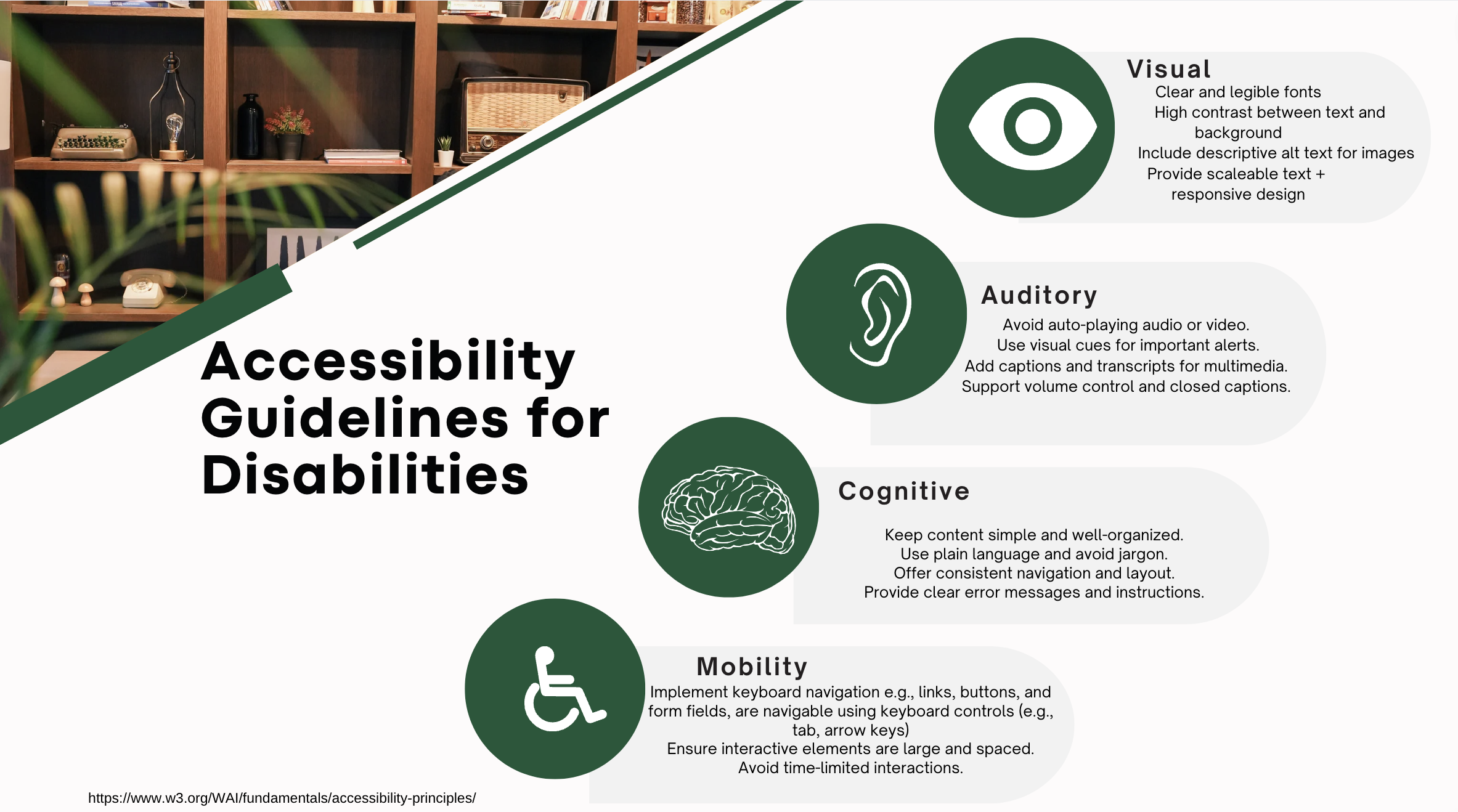
Figure 1. visually represents the considerations for designing web technologies for people living with disabilities.
Notably, while the WCAG guidelines offer valuable insights, it's worth noting that you can also explore the 10 usability heuristics for user interface design to further enhance inclusivelity and accessibility for underserved communities.
Building upon the importance of accessibility, ethical design goes hand in hand with ensuring that web technologies are inclusive and user-friendly. Now, we will explore the ethical principles that underpin good ethical design and behaviour.
Ethical Design Principles
In the realm of Responsible Computing, a set of ethical principles serves as the foundation for designing technology that respects users, aligns with their needs, and upholds societal values. These ethical principles encompass the following.
1. Respecting User Privacy:
- Handling personal data with care and transparency.
- Transparency and Honesty: Being open about data usage and technology functionality.
- Fairness and Bias Mitigation: Addressing algorithmic bias and promoting fairness.
- User Empowerment: Giving users control over their data and experiences.
- Inclusivity and Accessibility: Ensuring technology is equally accessible to all.
- Responsible AI and Automation: Considering the ethical impact of automation and AI.
2. User-Centered Design:
- Prioritizing the needs and experiences of users, creating technology that is intuitive, accessible, and responsive to diverse user backgrounds and abilities.
3. Professional Identity:
- Maintaining professional integrity and ethical conduct within the technology industry, fostering trust and accountability in the field.
4. Environmental Responsibility:
- Promoting sustainable practices in technology development and usage, minimizing the environmental impact of computing.
These ethical principles guide the development and usage of technology to ensure that it not only benefits individuals but also contributes positively to society and the environment. Now, let's extend our discussion to the realm of dark patterns within interactive media product design.
Dark Patterns in the Design and Development of Interactive Media Products.
Dark patterns are manipulative design techniques that benefit an online service by coercing, steering, or deceiving users into making unintended and potentially harmful decisions (Oreilly, n.d). As such, it is crucial to examine how the misuse of technology can lead to unethical practices that harm users and society, emphasizing the importance of aligning design and behavior with responsible and ethical standards.
Examples of dark patterns include but are not limited to the following.
- Roach Motel: Making it easy for users to get into a situation (e.g., subscribing to a service) but difficult to get out (e.g., Figma exploits this pattern).
- Sneak into Basket: While shopping online, a website adds an additional product to your cart without your consent, using a pre-checked box, and expects you to notice and remove.
- Hidden Fees: A travel booking website displays a base fare prominently but adds additional fees (e.g., service charges, taxes) only after you progress through several pages of the booking process.
- Confirmshaming (i.e., Using guilt or peer pressure to nudge users into unwanted actions.):Confirmshaming (i.e., Using guilt or peer pressure to nudge users into unwanted actions.): E.g., A website prompts users to subscribe to their newsletter with a dialogue box that says, "No, I don't want to save money."
- Privacy Zuckering (manipulating users to share more information than they initially intended to or understood): E.g.,: A social media platform makes it extremely convoluted to adjust privacy settings, pushing users to share more information than they intended.
- Friend Spam: E.g., A messaging app uploads a user's entire contact list without clear consent, spamming the user's contacts with invites to join the app.
For a comprehensive examination of deceptive online websites that exploit dark patterns, one valuable resource to explore is the "Hall of Shame." This evaluation offers detailed insights into instances where technology design deviates from ethical standards, further highlighting the need for responsible and user-centric design practices.
Examining dark patterns in interactive media product design highlights the vital importance of ethical behavior in the digital realm. These deceptive practices not only undermine trust but can also have adverse effects, particularly on users with disabilities and in underserved communities. In light of this, we must explore responsible computing within the broader context of cultural and social sensitivity. Our focus now shifts to understanding how technology can be more culturally sensitive, acknowledging the diverse values, norms, and customs that influence user experiences, and ensuring technology respects and aligns with different cultural and social perspectives.
Cultural and Social Sensitivities
Why it matters?
Responsible computing extends beyond technology to encompass an understanding and appreciation of diverse cultural and social values. Incorporating social and cultural factors into technology design is crucial for building inclusive, ethical, and user-centric solutions.
Key Considerations
- Diverse User Base: Recognise that technology serves individuals from a variety of cultural backgrounds, each with unique values and expectations. In my PhD study aimed at enhancing social connectedness between the elderly and their caregivers, I recognized the need to account for diverse cultural backgrounds, each with its unique values and expectations. To achieve this, I considered the perspectives of target groups hailing from China, Japan, the Caribbean, Canada, Germany, Italy, and more. This approach informed the development of activity-based ambient displays, tailored to foster intergenerational social connectedness across these culturally diverse settings.
- Avoid Stereotypes: Ensure that design choices do not perpetuate cultural biases or stereotypes.
- Language and Content: Provide multilingual interfaces and culturally sensitive content.
- Accessibility: Make technology accessible to users of diverse backgrounds and abilities.
- Local Laws and Norms: Comply with the laws and norms in regions where your technology is used, respecting cultural and legal diversity.
Best Practices
- User Research: Conduct in-depth research to gain insights into the cultural and social contexts of your users.
- Diverse Teams: Collaborate with culturally diverse teams to leverage different perspectives.
- User Testing: Test your designs with users from various backgrounds to ensure usability and cultural sensitivity.
- Customizable Options: Offer customizable settings and options to accommodate user preferences.
For a more in depth view of the design life cycle and best practices and methods, kindly review my article on the double diamond approach with example methods here.
Cultural and Social Sensitivities with Real Life Examples
- Airbnb: Airbnb addresses cultural sensitivities by implementing features like "House Rules" that allow hosts to specify rules and expectations for guests. This feature respects cultural norms and customs, helping users feel more comfortable and informed about their accommodations.
- WhatsApp: WhatsApp is available in over 180 countries and provides multilingual support. It also respects cultural norms by allowing users to customize notification settings, helping them observe cultural practices such as prayer times without interruption.
- Duolingo: Duolingo, a language-learning app, offers courses in numerous languages and regularly adds languages to its platform based on user demand. This reflects its commitment to respecting the diverse linguistic and cultural backgrounds of its users.
- YouTube: YouTube provides automated captions and subtitles in multiple languages, allowing creators to make their content accessible to a global audience. It also enforces community guidelines to ensure content is respectful of cultural and social sensitivities.
- Facebook: Facebook has implemented features such as "Safety Check," which allows users to mark themselves as safe during crises, recognizing the need for safety in various cultural contexts.
Conclusions
In this article, we have explained that responsible computing emphasises ethical behavior, societal impact, and sustainability in technology development. In addition, it encourages choices that ensure positive outcomes for individuals and society.
Moreover, we have examined topics such as inclusivity and accessibility, which prioritises accessible and user-friendly design for all individuals, regardless of ability. Thereby ensuring that technology is a tool for inclusivity, and not exclusion.
Furthermore, by exploring ethical design principles, we discovered that honesty, transparency, and privacy are paramount. Also, fairness, bias mitigation, and user empowerment drive ethical design.
Finally, by examining the notion of cultural and social sensitivities: we acknowledge the relevance of diverse cultural and social values in the design of interactive media products. Moreover, within this domain, promoting inclusive, respectful technology that adapts to global perspectives is paramount.
Our Key Take Away
Responsible computing integrates inclusivity, ethics, and cultural sensitivity, fostering technology that benefits everyone and respects individual and societal needs.
In the upcoming segment of this series on responsible computing (Part Two), our discussions will revolve around the following topics: privacy and data protection, fairness and bias mitigation, transparency and accountability, and the development of responsible AI models.
